
Key takeaways
- Half a raw red pepper (96 mg), a serving of broccoli (97 mg) or an orange (80 mg) covers the NRV for vitamin C, and more than twice the 40 mg a day the NHS says adults need.
- Vitamin C is lost through heat and storage. According to the NIH, steaming or microwaving keeps more of it.
- For zinc, 6 oysters (13 mg) or a beef steak (7 mg) give more than any plant food. Phytates in grains and pulses reduce how much you absorb.
- Eating well doesn't prevent colds, and neither does taking vitamin C every day, in the general population. The NHS says there is little evidence that supplements prevent colds.
The short answer
Vitamin C is the easiest nutrient to cover with food: half a raw red pepper, an orange or a serving of broccoli is around the NRV. Zinc takes more attention if you eat little meat or shellfish, because phytates in grains and pulses reduce how much you absorb. Neither, on the plate or in a pill, prevents colds: we explain the evidence in zinc and vitamin C for colds.
How much you need
| Nutrient | NHS daily need (UK) | EFSA reference intake | NRV on labels |
|---|---|---|---|
| Vitamin C | 40 mg/day | 110 mg/day (men), 95 mg/day (women) | 80 mg |
| Zinc | 9.5 mg/day (men), 7 mg/day (women) | 9.4–16.3 mg/day (men), 7.5–12.7 mg/day (women) | 10 mg |
The UK figures date from older UK reference values and are lower than EFSA’s; either way, the foods below cover them comfortably. The EFSA zinc range depends on the phytate in your diet: the low figure assumes about 300 mg of phytate a day, the high one about 1,200 mg, typical of diets with lots of whole grains and pulses.
Vitamin C: how much each serving gives you
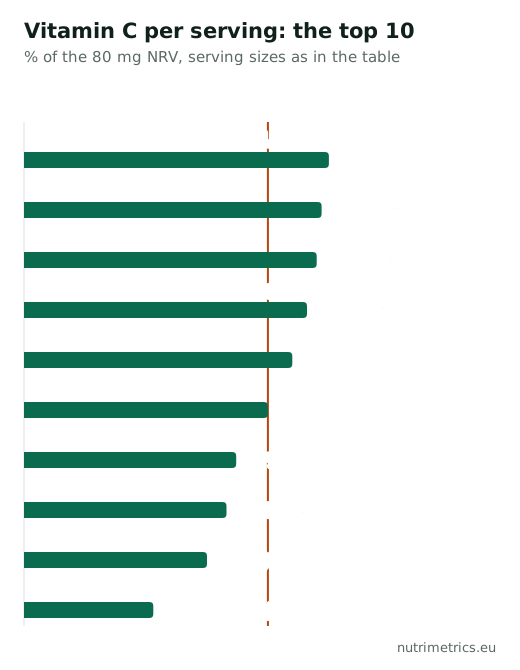
Sorted by vitamin C per serving. The last column shows whether the food meets the UK and EU threshold to be advertised as a “source of” vitamin C (15% of the NRV per 100 g) or “high in” vitamin C (30%).
| Food | Serving | Vitamin C (mg) | % NRV | UK/EU threshold (per 100 g) |
|---|---|---|---|---|
| Orange juice, freshly squeezed | 1 glass (200 ml) | 100 | 125% | high |
| Broccoli, cooked | 150 g | 97 | 122% | high |
| Red pepper, raw | half (75 g) | 96 | 120% | high |
| Brussels sprouts, cooked | 150 g | 93 | 116% | high |
| Strawberries | 150 g | 88 | 110% | high |
| Orange | 1 medium (150 g) | 80 | 100% | high |
| Kiwi | 1 (75 g) | 70 | 87% | high |
| Cauliflower, cooked | 150 g | 66 | 83% | high |
| Green pepper, raw | half (75 g) | 60 | 75% | high |
| Red cabbage, raw | 75 g | 43 | 53% | high |
| Mandarins | 2 (150 g) | 40 | 50% | high |
| Sauerkraut | 150 g | 22 | 28% | source |
| Tomato | 1 medium (120 g) | 16 | 21% | source |
| Potatoes, boiled | 200 g | 15 | 18% | — |
| Parsley, fresh | 1 tbsp (5 g) | 7 | 8% | high |
What the table shows:
- Almost every winter vegetable is “high in” vitamin C: broccoli, Brussels sprouts, cauliflower, red cabbage and peppers.
- Heat costs you. According to the NIH, vitamin C is destroyed by heat and long storage; steaming and microwaving keep more than boiling. That is why 75 g of raw red pepper gives so much.
- Citrus isn’t the only option. A serving of cooked broccoli gives more than an orange.
- Sauerkraut is a fair source, not an outstanding one: 22 mg per 150 g.
Zinc: how much each serving gives you
| Food | Serving | Zinc (mg) | % NRV | UK/EU threshold (per 100 g) |
|---|---|---|---|---|
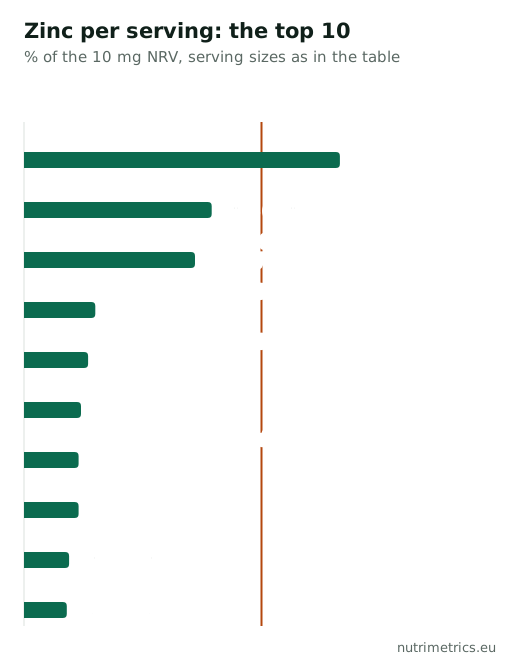
| Oysters | 6 (80 g) | 13.3 | 133% | high |
| Beef mince, cooked | 125 g | 7.9 | 79% | high |
| Lean beef steak, cooked | 125 g | 7.2 | 72% | high |
| Pork tenderloin, cooked | 125 g | 3.0 | 30% | source |
| Mussels, cooked (meat) | 100 g | 2.7 | 27% | source |
| Chicken thigh, cooked | 125 g | 2.4 | 24% | source |
| Pumpkin seeds, hulled | a handful (30 g) | 2.3 | 23% | high |
| Chickpeas, cooked | 150 g | 2.3 | 23% | source |
| Lentils, cooked | 150 g | 1.9 | 19% | — |
| Rolled oats | 50 g | 1.8 | 18% | high |
| Cashews | a handful (30 g) | 1.7 | 17% | high |
| Prawns, cooked | 100 g | 1.6 | 16% | source |
| Emmental | 30 g | 1.3 | 13% | high |
| Manchego cheese | 30 g | 1.2 | 12% | high |
| Wholemeal bread | 2 slices (60 g) | 1.1 | 11% | source |
| Egg | 1 medium (60 g) | 0.8 | 8% | — |
What the table shows:
- Oysters are by far the richest source of zinc; the NIH puts them first too.
- Red meat is the everyday source: a 125 g beef steak gives 72% of the NRV.
- Plant foods give less, and the NIH notes that phytates in grains and pulses bind zinc and reduce its absorption. That is why EFSA sets a higher need for diets rich in phytates.
- Hard cheese helps: 30 g of Emmental or Manchego gives over 1 mg.
Two recipes with the numbers
One comes from our Spanish edition, one from our German edition.
Orange, red pepper and pumpkin seed salad (2 servings)
Ingredients: 2 oranges (300 g peeled), 1 red pepper (150 g), 20 g roasted pumpkin seeds, half a spring onion (50 g), 2 tbsp extra virgin olive oil, salt and pepper.
- Peel the oranges with a knife, removing the pith, and slice them.
- Cut the pepper into thin strips and the spring onion into fine slices.
- Toss, dress with oil, salt and pepper, and finish with the seeds.
Per serving: about 178 mg vitamin C (222% of the NRV) and 1.1 mg zinc. The orange and pepper are raw, so no vitamin C is lost to cooking.
Brussels sprouts and lentil pan with pumpkin seeds (2 servings)
Ingredients: 300 g Brussels sprouts, 250 g cooked lentils (such as green or Puy lentils), 20 g pumpkin seeds, 1 onion (100 g), 2 tbsp rapeseed oil, 1 tsp mustard, salt and pepper.
- Halve the sprouts and steam them for 5–6 minutes.
- Fry the onion in the oil, add the sprouts and lentils and fry for 3 more minutes.
- Season with mustard, salt and pepper and scatter over the pumpkin seeds.
Per serving: about 99 mg vitamin C (124% of the NRV), 2.9 mg zinc (29%) and 6.9 mg iron (49%).
When food isn’t enough
- If you are vegan and eat lots of whole grains and pulses, keep an eye on zinc. According to the NIH, soaking beans, grains and seeds in water for several hours before cooking may help you absorb more.
- If you’re considering a zinc supplement, don’t take more than you need: the NHS says no more than 25 mg a day from supplements, EFSA sets the safe upper limit at 25 mg a day in total, and the NIH warns that 50 mg or more over weeks can reduce copper absorption. More on our zinc and vitamin C pages.
This guide is part of the series The best supplement is on your plate.
How we calculated the numbers
Values per 100 g come from the USDA’s FoodData Central database (SR Legacy), checked against Spain’s BEDCA database; Manchego comes from BEDCA. Vegetables marked “cooked” use the value for boiled vegetables. NutriMetrics calculates the servings, percentages and recipe values. The % NRV uses the references in Regulation 1169/2011, which applies in the UK and the EU: 80 mg of vitamin C and 10 mg of zinc. UK daily needs come from the NHS. Real amounts vary with the variety, storage and cooking method.
FAQ
How much vitamin C do I need a day?
The NHS says adults need 40 mg a day. EFSA's reference intake is much higher: 110 mg for men and 95 mg for women. The NRV on labels is 80 mg. An orange and a serving of broccoli together already give more than 170 mg.
How much zinc do I need a day?
The NHS says about 9.5 mg a day for men and 7 mg for women. EFSA's figure depends on how much phytate you eat: 9.4 to 16.3 mg for men and 7.5 to 12.7 mg for women, the higher figure for diets with lots of whole grains and pulses.
Does cooking destroy vitamin C?
Partly. According to the NIH, heat and long storage reduce it, and steaming or microwaving reduces the losses. The broccoli, Brussels sprouts and cauliflower figures in our table are already for cooked vegetables.
Is sauerkraut a good source of vitamin C?
A fair one: 150 g gives about 22 mg and meets the UK and EU threshold for "source of". Raw peppers, cabbages and citrus give much more per serving.
Should I take zinc in winter?
If you eat meat, shellfish or pulses regularly, you probably don't need it. The NHS says not to take more than 25 mg a day of zinc supplements unless a doctor advises it (EFSA's upper limit is also 25 mg, from all sources), and high doses over weeks can reduce how much copper you absorb.
Sources
- NHS — Vitamin C
- NHS — Others (magnesium, selenium, zinc)
- NHS — Common cold
- USDA FoodData Central — SR Legacy (food composition per 100 g)
- AESAN — Spanish food composition database (BEDCA)
- NutraIngredients — EFSA issues intakes for vitamin C (2013)
- Nutrition Insight — EFSA issues advice on dietary reference values for zinc
- EFSA — Overview of tolerable upper intake levels (2024)
- NIH Office of Dietary Supplements — Vitamin C, fact sheet for health professionals
- NIH Office of Dietary Supplements — Zinc, fact sheet for health professionals
- Hemilä H, Chalker E. Vitamin C for preventing and treating the common cold. Cochrane, 2013
- Regulation (EU) No 1169/2011, Annex XIII — reference intakes (NRV) and significant amount
- European Commission — Nutrition claims ("source of", "high")