
Key takeaways
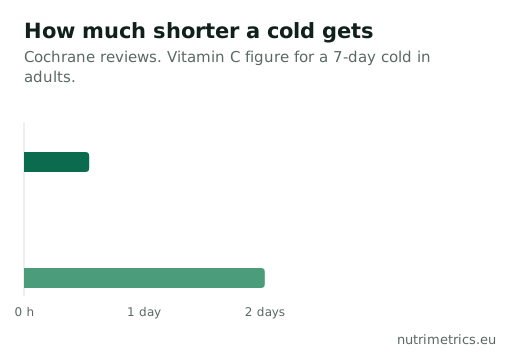
- Daily vitamin C does not prevent colds in the general population. It shortens them slightly: 8% in adults and 14% in children.
- Starting vitamin C once a cold has begun has no consistent effect, according to the Cochrane review.
- Zinc may shorten a cold by about 2 days if started early, but the evidence is low certainty, and it does not prevent colds.
- The NHS says there is little evidence that supplements such as vitamin C prevent colds or help you get better more quickly.
- UK and EU law allow zinc and vitamin C to claim they contribute to the normal function of the immune system, not that they prevent or cure colds.
The short answer
Neither zinc nor vitamin C is a shield against colds. Daily vitamin C does not reduce how many colds you catch, though it shortens them slightly. Starting it once you are ill has no consistent effect. Zinc may shorten a cold by about two days if taken early, but the evidence is low certainty. If you eat fruit and vegetables every day, you probably already get enough vitamin C.
What the Cochrane reviews found
| Question | Vitamin C (Cochrane 2013) | Zinc (Cochrane 2024) |
|---|---|---|
| Fewer colds? | No in the general population (10,000+ participants). Yes under extreme physical stress: risk halved in marathon runners, skiers and soldiers in subarctic exercises | No clear benefit for prevention |
| Shorter colds if taken daily? | 8% in adults, 14% in children | — |
| Worth starting at first symptoms? | No consistent effect in trials | May shorten by about 2 days (8 studies, 972 people), low certainty |
| Side effects | Doses of several grams can upset the stomach | Nausea, digestive upset, bad taste |
In context: a 7-day adult cold would be about 13 hours shorter with daily vitamin C taken all year. The review’s authors conclude that routine supplementation is not justified for the general population.
On zinc, the review’s senior author said the evidence is “far from settled”: trials use very different forms, doses and lozenges.
What the NHS says
The NHS common cold page puts it plainly: there is little evidence that supplements such as vitamin C, echinacea or garlic prevent colds or help you get better more quickly. It recommends rest, fluids, and painkillers or decongestants from a pharmacist if you need them.
What the law allows on the label
The Great Britain and EU registers have the same claims here:
| Nutrient | Authorised claim | Minimum per daily dose |
|---|---|---|
| Vitamin C | Contributes to the normal function of the immune system | 12 mg |
| Vitamin C | Contributes to maintaining normal immune function during and after intense physical exercise | 200 mg on top of normal intake |
| Zinc | Contributes to the normal function of the immune system | 1.5 mg |
| Vitamin D | Contributes to the normal function of the immune system | 0.75 µg |
None mentions preventing, shortening or curing colds; in the UK a claim like that would make the product a medicine. See our table of approved health claims.
How much is too much
- Zinc: the NHS says not to take more than 25 mg a day of zinc supplements unless a doctor advises it, because high doses reduce copper absorption. EFSA’s tolerable upper level is also 25 mg a day, for food and supplements combined; Germany’s BfR recommends no more than 6.5 mg per daily dose in a supplement. Treatment trials often use higher doses for a few days; don’t continue them long term without medical advice, as excess zinc can cause copper deficiency.
- Vitamin C: the NHS says less than 1,000 mg a day from supplements is unlikely to cause harm; more can cause stomach pain, diarrhoea and wind. EFSA has not set an upper level for lack of data. People prone to kidney stones should check with their GP first.
What makes sense this winter
- Diet first: one orange or kiwi supplies a good share of daily vitamin C.
- Extreme physical effort (marathons, mountaineering in the cold) is where vitamin C has the strongest evidence.
- If you want to try zinc, start at the first symptoms, for a few days only, without exceeding long-term limits.
- Vitamin D: the NHS advises everyone to consider 10 µg a day in autumn and winter, for bones and muscles rather than colds. See vitamin D in winter.
- Get help if you have a high fever, difficulty breathing or a cold lasting more than three weeks: contact your GP or NHS 111.
Our goal finder shows which ingredients have immune claims and at what doses.
FAQ
Does vitamin C prevent colds?
Not in the general population. The 2013 Cochrane review, with more than 10,000 participants, found no fewer colds with daily vitamin C. The exception was people under extreme physical stress, such as marathon runners, whose risk roughly halved.
Does vitamin C help once I already have a cold?
According to the Cochrane review, trials that started vitamin C at the first symptoms showed no consistent effect on duration or severity.
How much zinc is safe?
The NHS says not to take more than 25 mg of zinc supplements a day unless a doctor advises it. EFSA's tolerable upper level is also 25 mg a day, but for food and supplements combined. Germany's BfR recommends no more than 6.5 mg per daily dose in a supplement.
What are the side effects of zinc?
The 2024 Cochrane review lists nausea, digestive upset and a bad taste. High doses taken for a long time can cause copper deficiency.
What about vitamin D?
Vitamin D also has an authorised immune claim, and low levels are common in winter. See our guide to vitamin D in a European winter.
Sources
- NHS — Common cold
- NHS — Others (magnesium, selenium, zinc)
- NHS — Vitamin C
- DHSC — Great Britain nutrition and health claims (NHC) register
- Hemilä H, Chalker E. Vitamin C for preventing and treating the common cold. Cochrane Database Syst Rev, 2013
- Nault D et al. Zinc for prevention and treatment of the common cold. Cochrane Database Syst Rev, 2024
- Cochrane — Inconclusive evidence suggests zinc may slightly shorten common cold (2024)
- EFSA — Summary of tolerable upper intake levels for vitamins and minerals (2024)
- BfR — Proposed maximum levels for zinc in food supplements
- European Commission — EU Register of nutrition and health claims